Virtue: A Habit to do the good, give the best of yourself, and be more like God in what you say and do.
To tie in with our study of sainthood
and the universal call to holiness, I decided to do a little more
intentional instruction about the virtues. Visit here for the original graphic organizer we added to our notebooks to start things off.
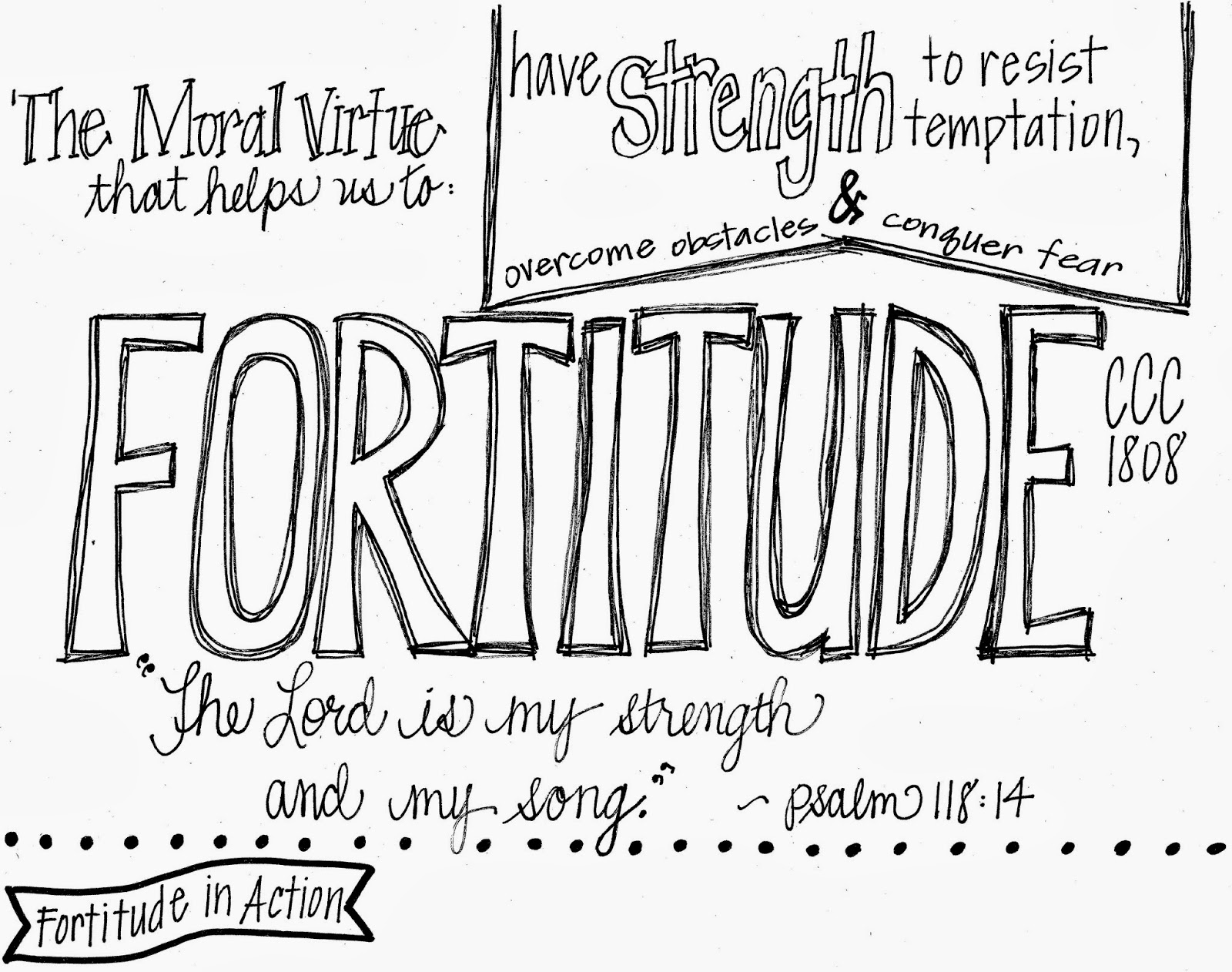
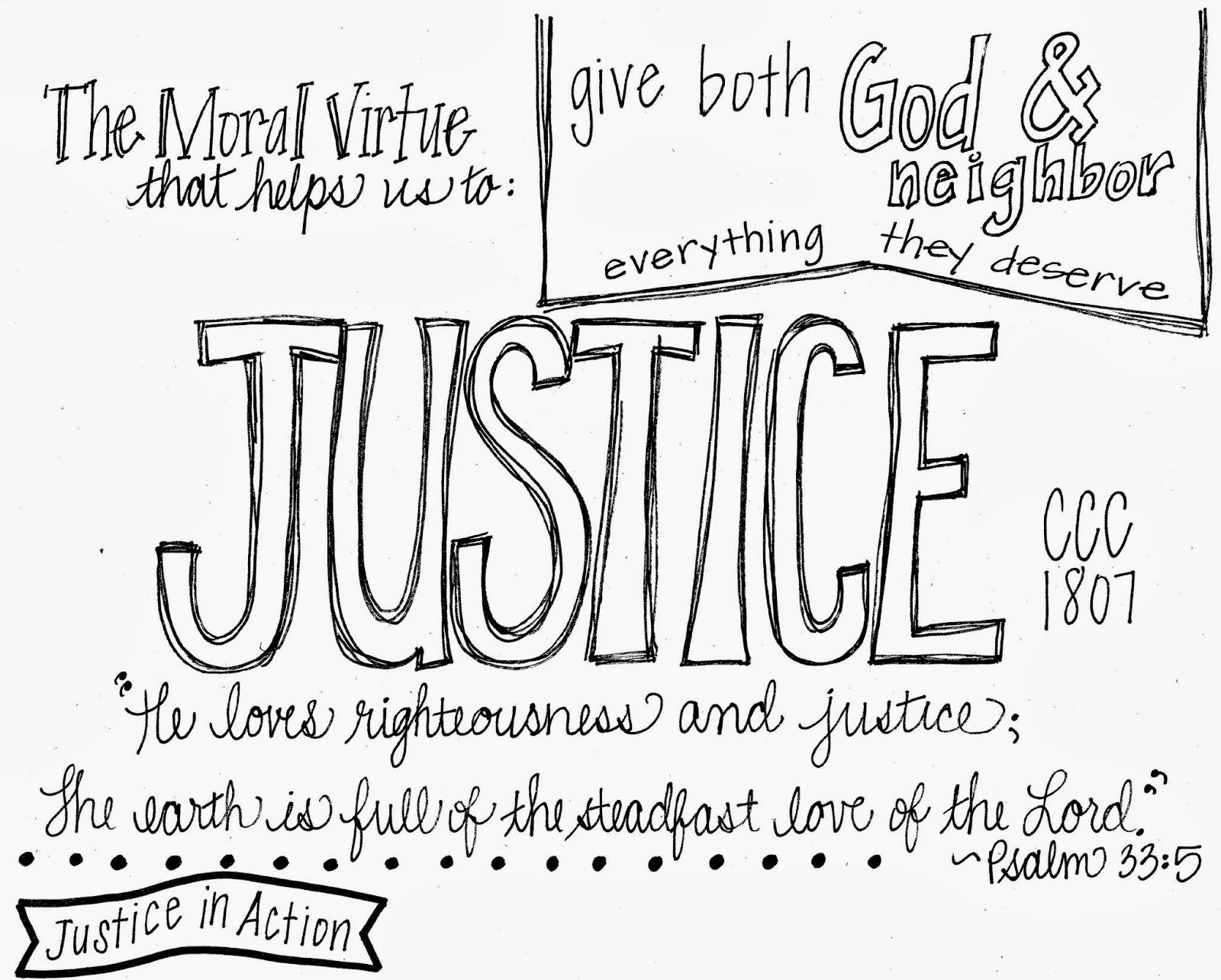
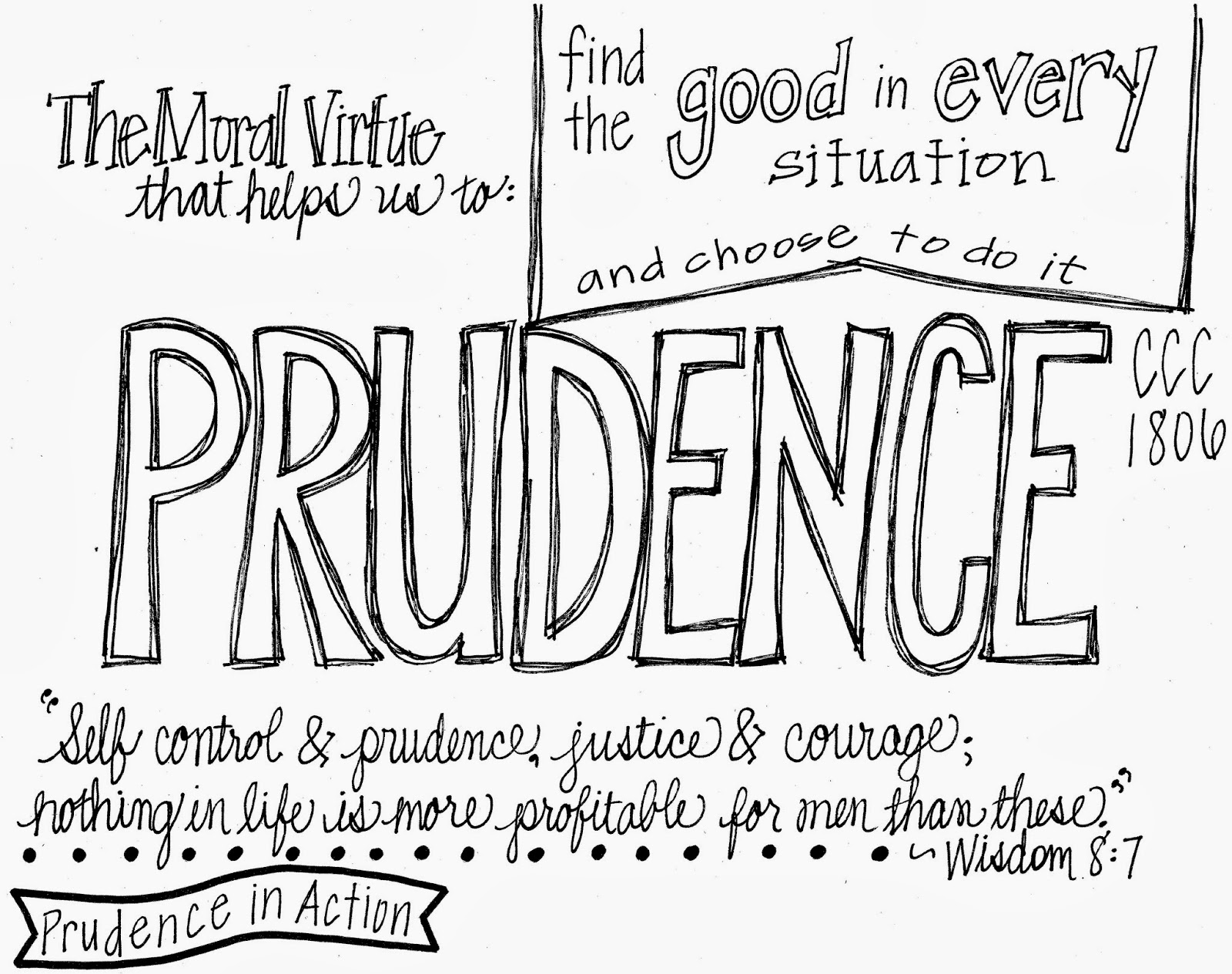
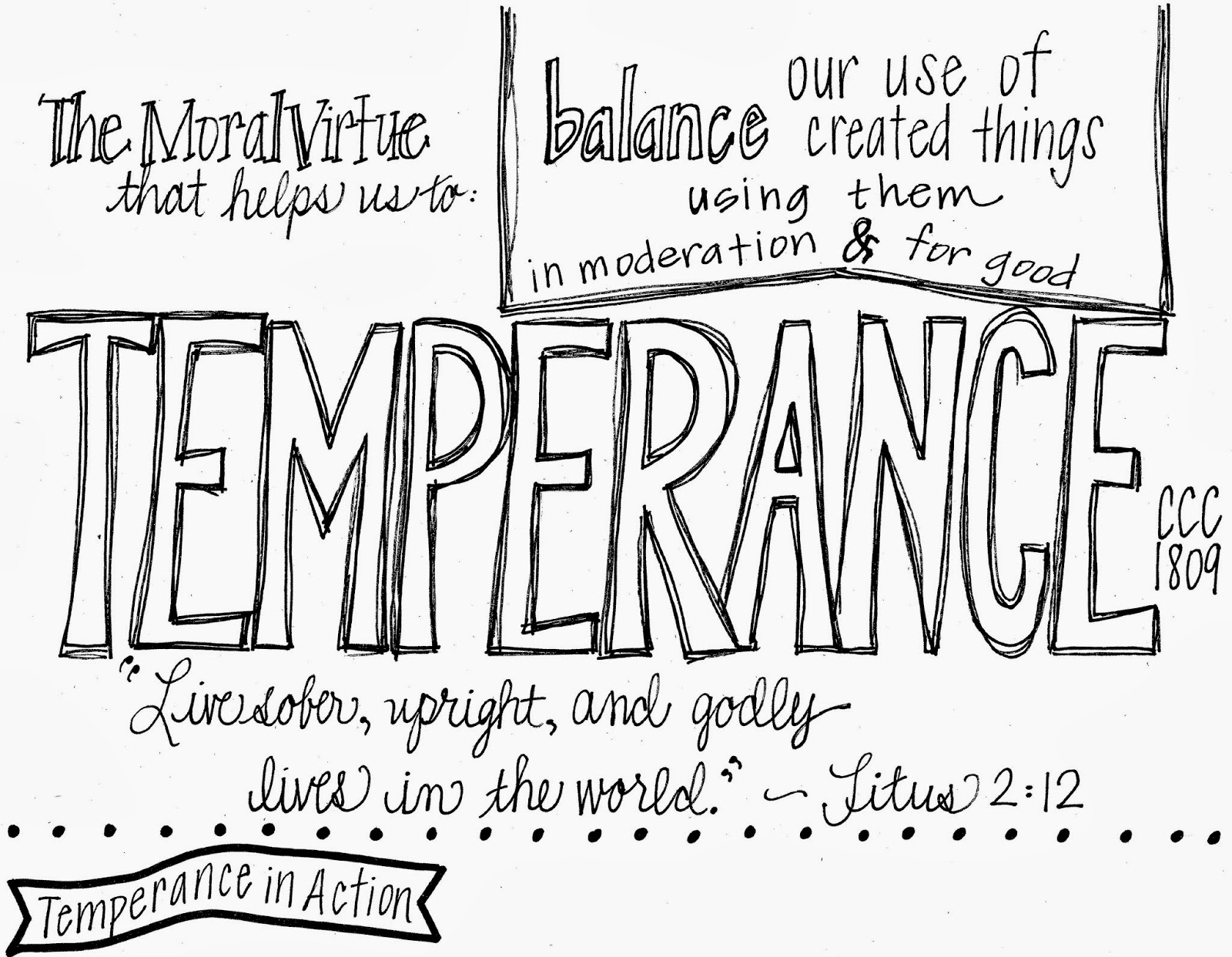
I have been introducing the kids to each of the moral virtues: prudence, justice, fortitude, and temperance. We have been focusing on one virtue each week. I made a printable for them to add to their Sheen notebooks, which I printed half sized to better fit on a notebook page. Both full size and 2-per-page options to print can be found below.
We talked about the virtue and then recorded some practical examples in the section that says "prudence in action." Mindful that growing in holiness, which we are all called to, means growing in virtue, each kid then made a goal related to that virtue to work on for the week. They wrote their goals on post-it notes and then stuck them on this poster on the door. I love this poster- It has gotten a lot of mileage. Simply a piece of posterboard divided into squares that are about 4x4" and marked with the numbers 1-30, it allows the kids to stick a 3x3" post-it note recording their thoughts or questions on a particular topic quickly. I added a page protector at the top so I could easily create a title or question for the top of the poster. This is just is latest use.
We also created a class goal for the virtue, decided on by the kids, and we worked on it all week (and it continues to come up in the weeks following). For example, prudence's goal was to choose to be positive when it would be easier to be negative. Justice's goal was to include everyone in conversations and games.They are doing a great job finding the practical in something that can seem very theoretical.
Later, I will post the Theological Virtue note pages, as well as classroom encouragement system that we are using to link our study of virtue with our study of the life of Fulton Sheen.
Click on the pictures below for the full page printables:
This
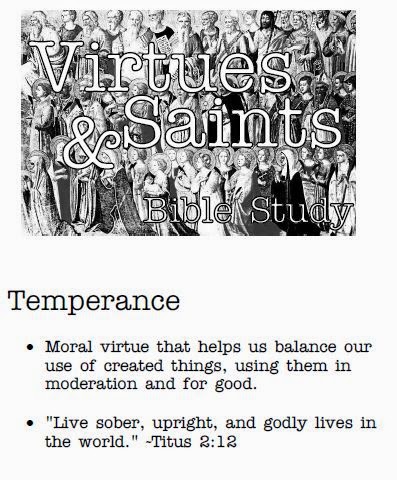
past spring, my young adult Bible Study explored the seven virtues.
This study also connected the lives of the Saints and challenges to
evangelize. We thought these tied in so well because the Saints give us
the example of heroic virtue, and our call to evangelize is one way to
live the virtues out.
The leaders of the Bible Study and I
worked together to gather the material and choose the scripture verses
and Saints to discuss. I think that we were able to create a pretty
unique look at the virtues, and with the their permission, I plan on
using a slightly adapted version of the study with my Youth Group kids
this fall. (Thanks J, H, & J!) I simplified the outlines a bit and
changed the wording to make it more teen friendly. I'd like to share
those outlines here so that someone else might get some use out of them
as well.
This post contains the outlines (two pages each, booklet style) for
each of the Moral Virtues- temperance, fortitude, prudence, and justice. The other three outlines for the Theological Virtues (meant to be taught first) can be found here.
Click here for the Bible Study guide on the virtue of temperance:
Click here for the Bible Study guide on the virtue of fortitude:
Click here for the Bible Study guide on the virtue of prudence:
Click here for the Bible Study guide on the virtue of justice:
“Books are the most wonderful friends in the world. When you meet them and pick them up, they are always ready to give you a few ideas. When you put them down, they never get mad. When you take them up again, they enrich you all the more.” ~Archbishop Fulton J. Sheen
Our Catholic classrooms (whether school or parish) should be filled with good Catholic books. But how do we find them, and how do we use them? How do we keep kids reading as a way to both catechize them in the teachings of the Church and engage their hearts to make the faith part of their daily lives?
(Click here to view the presentation slides on this topic, including clickable links to resources)
My first philosophy is that we should fill our classrooms and homes with Catholic books of all kinds and styles that are true, good, and beautiful. If the books are readily available, students are more likely to pick them up and teachers are able to use them to enrich instruction. I'll have a list of my favorite Catholic books posted later this week, but in the meantime, here are some things to consider as you grow your own Catholic library:
Consider the source of the book. Is it's information true and trustworthy? Can you teach older students to discern the quality of a Catholic book?
Does your library contain varied styles of Catholic books, both to engage students with their favorites as well as to entice them to read something new?
Biographies
Graphic novels
Info books
Devotionals
Journals
Picture books
Novels
Do you have books covering a variety of Catholic genres?
Old Testament
New Testament
Saints
Sacraments
Church History
Prayer
Liturgical Year
Does the book contain supplemental info, increasing its value as a resource?
Part of a series
Resources in back
Linked to a website
Connected to curriculum
Evaluate the illustrations:
True, good, & beautiful
Attractive to target age
Contribute and add to the story or content
Variety of photos, classic art, and illustrations
Can the book be read with more than one sense, adding to the layers of its meaning and depth?
Literal
Moral (discerning right from wrong)
Allegorical (symbols, mysteries, and connections to Christ, Church, the Saints, etc.)
Anagogic (pointing to the truth and beauty of Heaven)
Are there symbols embedded within the story or illustrations that have deeper meaning?
Are examples of virtue celebrated and vice condemned?
Faith
Hope
Love
Fortitude
Temperance
Justice
Prudence
One way to help expand a Catholic library is to remember that books don't have expiration dates. We might look at a picture book and assume that it is only good for a young child, but its value can grow and change with older readers. We might also see a text that is too high of a reading level for a primary student, but can find ways to use it as a valuable resource when they are young. Here are a few ideas for how books can be used outside of their expected age ranges.
Stretch to older readers:
Use illustrations, write own captions
Listen as a read aloud
Teach to a younger buddy
Use to intro new material
Tool for review
Stretch to younger readers:
Look at illustrations/diagrams
Listen as a read aloud
Use in chunks- just one chapter or section
Exploration basket or shelf
Use as resource book
To help you and your students think about the good Catholic books that you are reading, I created a few printables for you to use. One page has spots for about 50 book titles (of any kind) to be written in. The other has shelves that are labeled with six different Catholic book categories.
Here are a few ideas for the bookshelves:
Have students explore classroom books and the library for good Catholic books and make a "wish list" of what they want to read this year.
Write titles on the spines and then color in as they are read.
Keep the bookshelves glued inside the cover of a prayer journal or reading notebook for easy access. At home, they would look great on a fridge or taped on the side of a bookshelf.
Challenge your students to read in different categories by using the labeled shelf page. That way they have to read at least a few books from the six categories.
Use the blank shelf to create your own categories of books to read, or change it to styles (try Catholic graphic novels, biographies, info books, etc.
Have a book talk or book sharing time where students use their shelves to talk with a partner or small group about books they would recommend.
The shelves are not meant to be a competition- if a students fills one shelf, they can simply start another page and keep on keeping track of the great books they've read.
Click here for the Bookshelf Sheen Quote Bookmarks:
Click here for the Choosing and Using Good Catholic Books Handout:
(A checklist of the discussion points above, meant to be used by you as you are thinking about adding books to your library, conversations with your coworkers, etc.)
Click here for the Catholic Bookshelf Printables: (all four pages in one pdf)
And here are a couple of other resources to celebrate reading:
Click here for this Fulton Sheen Quote Coloring Page:
Click here for these sweet watercolor bookshelves (in two sizes) to keep track of what you and your students are reading:
Enjoy some good music about the Holy Spirit while you read a long post.
We are still in the midst of reviewing the Sacraments in my 5th grade classroom. Last week, to tie in with Pentecost, we reviewed the Sacrament of Confirmation. As we are doing these reviews, I am not covering all of the content that we have already discussed, but just trying to drive home a few points for them to remember.
My points this time:
-You receive the Holy Spirit in a unique way at your Confirmation.
-That Holy Spirit is the same Holy Spirit that has always been, from the creation of the world to Pentecost to now.
-At Confirmation, you receive the Gifts of the Holy Spirit, which help you on your journey as a Christian.
So here is the activity:
Give each student a piece of 8 1/2 x 11" paper that is either yellow, orange, or red. (9 x 12" construction paper works just fine too.)
Have them fold it into eighths- ending up with pieces that are 2 3/4 x 4 1/4". They can then cut on those lines, ending up with eight pieces of paper. Have them set one piece aside.
Have them take one and draw some kind of flame shape that takes up most of the small sheet of paper. You could provide a template, but this might be a good opportunity for them to explore their artistic ability and creativity. They can all look different (see below). To save time, the students can cut out one flame and then trace it on the stack of six remaining sheets and cut out 2-3 at a time. This depends on the age and small motor skills of your students.
Then, have them trade the remaining 1/8 of the sheet with someone who had a different color from them. Have them cut it into 7 strips of equal size. ( I had some students cut it into 8 "squares" and then just throw one away. Whatever works.)
On those seven strips, write the seven gifts of the Holy Spirit: wisdom, knowledge, understanding, fear of the Lord, piety, counsel, and fortitude.
Then on each of the flames, write a brief explanation of the seven Gifts.
Here are the definitions we used, but you could create your own age appropriate ones or have the students come up with their own.
-helps us see and follow God's will in our lives
-helps us to love others as Jesus calls us to do
-brings us to know more about God and his plan
-aids us in making good choices
-helps us to see God's presence in the world
-strengthens us to give us courage to evangelize
-makes it possible for us to love and respect all God's creation
Then have the kids glue the flames in a notebook (or large sheet of paper.)
We put them in our Sheen Notebooks.
Their next task is to match the Gifts with the descriptions and glue them in.
We added the reminder that "The same Holy Spirit that comes to us at our Confirmation came to the Apostles and Mary at Pentecost!"
We also added the Scripture from Acts 2:1-4- "When the day of Pentecost had come, they were all together in one place.And suddenly there came from heaven a noise like a violent rushing wind, and it filled the whole house where they were sitting.And there appeared to them tongues as of fire distributing themselves, and they rested on each one of them.And they were all filled with the Holy Spirit and began to speak with other tongues, as the Spirit was giving them utterance."
Here are some student examples of their flames: Come Holy Spirit!
It's a new school year. My time is spent organizing school supplies and teaching routines, introducing new concepts and getting to know new kids. This season of change is exciting, sentimental, and challenging not only for the students, but also for their teachers and parents. Last year, I was asked to give a quick talk on thing teachers wished parents knew. This post is the fruit of notes from that night of sharing and collected conversations, and it seems like a great time of year to share it.
Here are the seven things I wish every mom (and dad) knew:
1. You are the first and most important teacher of your children. Nothing can replace your influence. We are your partners in this endeavor to help your child grow into the kind, loved, talented, responsible, intelligent person God created him to be.
2. If you are wondering what you can do to help your child's education: Read & Pray.
Read to them, read with them, let them see you read.
Pray for them, pray with them, let them see you pray.
Both of these things, although they may seem simple, matter and influence every other part of a child's formation and education.
3. Love multiplies, not divides.
Your child is everything to us, but she is also one of 25, one of a whole school. We strive to see every individual, to know her, to support and challenge her, and we also have to care for every kid in our classroom, each year, in every school.
4. "Fair" and "Equal" and "Same" are not black and white words in our classrooms. Please don't compare what has been determined to be the best educational plan for each student. I won't talk about another child with you, but you can be assured I won't talk about your child with another parent.
5. We appreciate your communication.
A quick note, an emailed question, checking in during pick up- You are your child's best advocate, so certainly speak up when you have a concern or question. But please, in tough situations, don't assume the worst of us. Be willing to listen to another adult perspective before jumping to conclusions. We are so grateful to be respected as partners in your child's education.
6. To be honest and practical:
A teacher will graciously accept the pinterest created/inspirational nik-nak/cutesy collectible as an appreciation/Christmas/end-of-the-year gift. But do you want to know our real love language? Give us a handwritten card from you and your husband and/or a picture or letter created by your child- I will keep and treasure those long after I have to figure out what to do with this year's collection of gifts. If you really want to spend money, buy us classroom supplies. Ask us for a wishlist and stock up on all the things we love to provide for our students that don't fit in the school budget. Or donate to a charity in honor of our class. And if you must... Starbucks Gift Cards are always welcome :)
7. Most importantly, it is a privilege for us to teach your children.
We are blessed to spend time with them, to help form them and watch them grow. We are grateful to be a part of your family, even if it is only for a school year. Your children will always matter to us.
And a few bonus topics that came up in conversation as a result of my talk:
-When I spoke to several teachers from different schools and grades, ALL of them brought up communication as something they wished teachers and parents were on the same page with. Here are a few of their thoughts:
Talk to us instead of your child's classmates' parents. Expect a reasonable response time, especially when emailing outside of school hours- we respect your family time and appreciate the same consideration. Take advantage of the many ways that most schools communicate- websites, social media, newsletters, etc. As is age appropriate, have you asked your child first? Help him to be accountable and responsible.
-How do you support your child when they have a teacher they don't get along with? This is tough. My thoughts are a balance between advocating for the well being of your child as well as helping them grow in the virtue of fortitude and the skills of navigating challenging relationships. Your reactions could range from teaching your child coping mechanisms and helping them self-advocate to intervening on their behalf. It all depends on the maturity of the child and the severity of the situation. -When do you intervene in your child's school social situations? (Building friendships, helping them learn to play with others, etc.) Social growth develops so differently for each child and doesn't always follow a specific "grade level" trajectory. Again, it's important to advocate for your child and keep the teacher in the loop with social situations that might be happening outside of school, but you also need to let the kids stretch their wings. An intervention from a parent can end up being the worst thing when trying to foster social situations, especially as kids get older. It is important to encourage your child to build lots of types of friendships in different situations, even with kids of different ages. Play groups, activities, neighborhood friends, etc.- these all can help model appropriate social behavior and how to be a friend. -How can you encourage a more Catholic atmosphere in your child's classroom? My suggestions for this are to help the teacher by "finding" great resources for them to make it easy to weave in faith throughout the school day. Purchase a favorite Catholic book and donated it to the class. Loan Catholic books or a DVD from your family's collection for an upcoming Feast Day. Offer to come in to lead an art lesson or story time that relates to the Liturgical Season. Email links to solid (educational, well made, age appropriate) Catholic printables/activities. When you are involved in classroom parties, take advantage of the time to infuse the faith as you plan games and activities. Invite the teacher to local retreats/studies/speakers to strengthen his/her own faith. And super importantly- pray for your kids' teachers. We all need your prayers more than anything! :) So those are my thoughts. Educators of all kinds, what else do you wish parents knew? Parents, what do you want teachers to know? I'd love to hear your ideas in the comments! :)